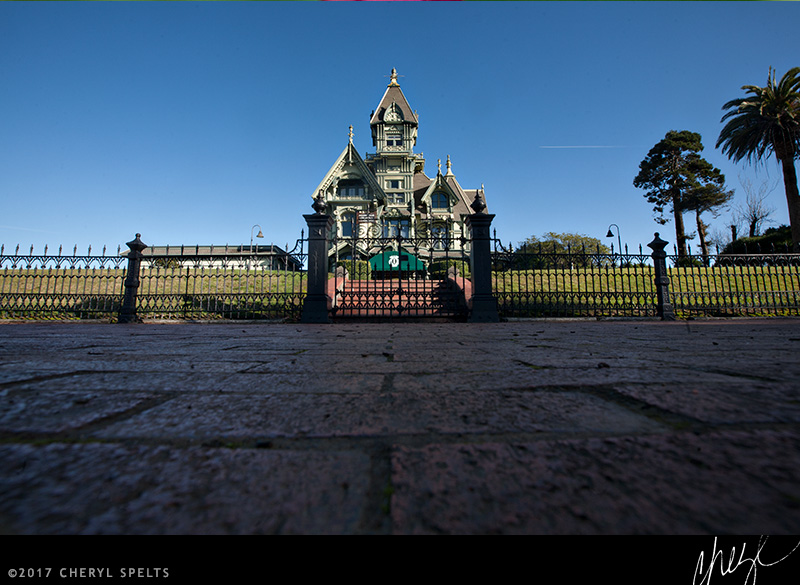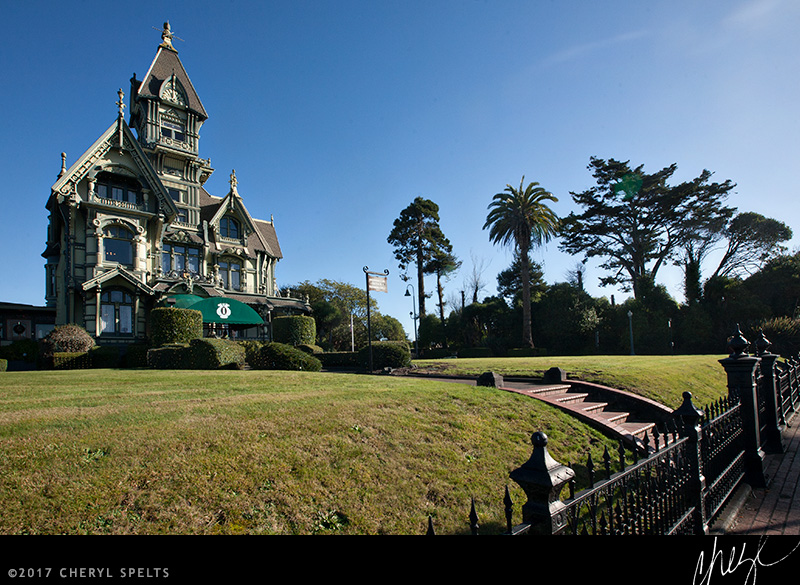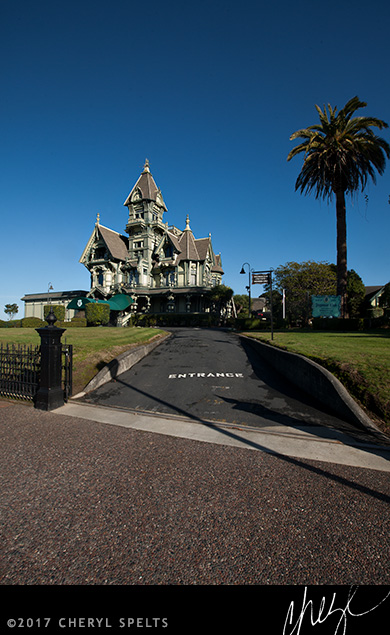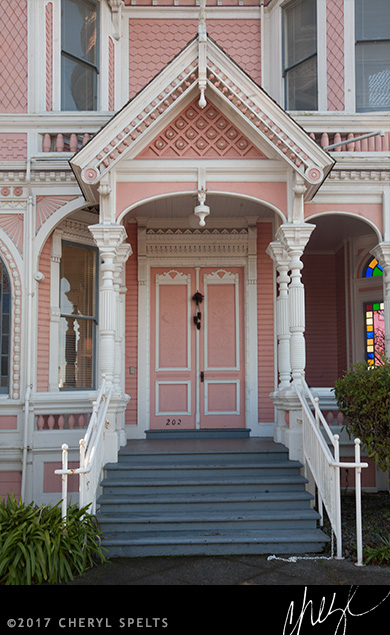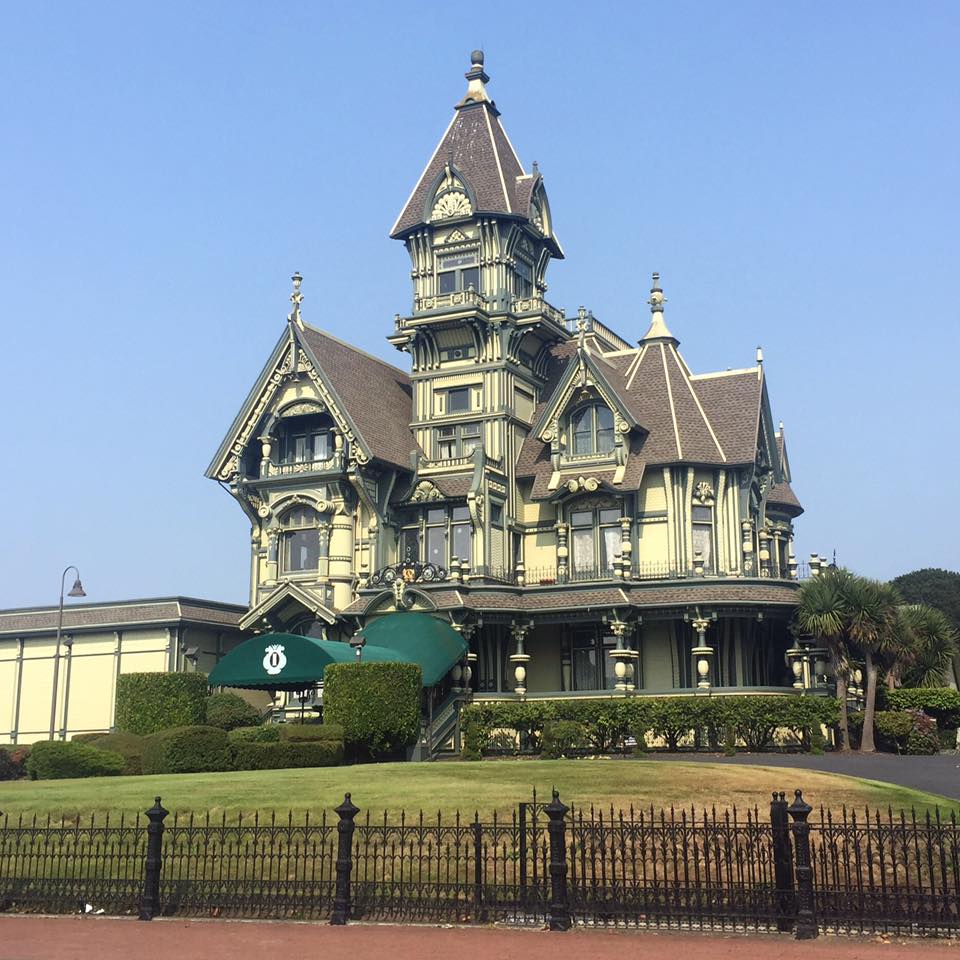
On March 30, 2012, the Press Enterprise ran a couple of my photos of the Estudillo Mansion in an article on the San Jacinto landmark, that was featured on the front page of their Local Section of the Sunday paper. It’s always fun to see one of my photos on the front page of any section of a traditional printed newspaper!


Home > Local News > Riverside County > Hemet-San Jacinto > Hemet-San Jacinto Headlines

SAN JACINTO: Mansion last piece of 19th-century dynasty

CHERYL SPELTS/CONTRIBUTED IMAGE
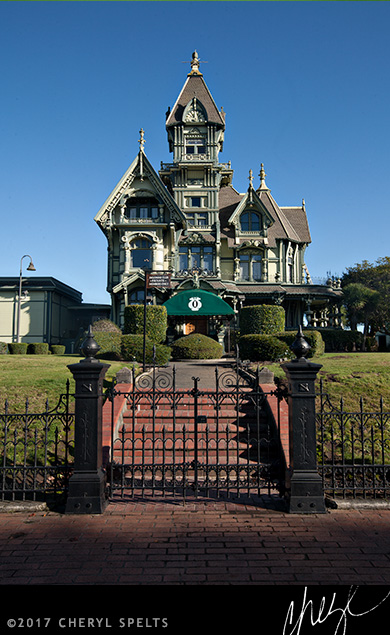
The Estudillo Mansion, built in 1884, fell in and out of disrepair throughout the 20th century. It’s since been restored by a local group and is part of the Francisco Estudillo Heritage Park in San Jacinto.

BY MAURA AMMENHEUSER
CORRESPONDENT
news@pe.com
Published: 30 March 2012 10:39 PM

A stately home on 6 acres in central San Jacinto is an elegant token left over from a 19th-century dynasty.
The Estudillo Mansion was built in 1884 by Francisco Estudillo, according to a history posted on the city of San Jacinto’s website: “The mansion and a twin mansion, built by his brother, (Jose) Antonio Estudillo, near Soboba Hot Springs, are all that remain of a 35,000-acre Mexican land grant given to their father, Jose Antonio Estudillo, in 1842.”

The father was in charge of the San Luis Rey mission, hence the land grant from Mexico, which the region belonged to until 1850, said Sharon Terracciano, an Estudillo Restoration Association volunteer.

Francisco Estudillo — the younger of the brothers, born in 1844 — traveled with the family’s cattle, which grazed in the San Jacinto area. Initially he lived in an adobe that later burned. After his marriage, he built the mansion.

Estudillo was San Jacinto’s first postmaster, the city’s website notes. He was also a Mission Indian Agent for the U.S. government. Estudillo served on the school board and was San Jacinto’s second mayor, from 1890 to 1892.

Perhaps befitting Estudillo’s high profile, his two-story home had eight rooms, graced by soaring ceilings, Terracciano said. “They had beautiful cross breezes for ventilation,” she said.

Upstairs are four bedrooms. Ground-floor rooms include a “gentleman’s parlor,” said Cheryl Spelts, a photographer who posts her images of the mansion on her website. Estudillo’s safe is still in the wall. A music room displays a piano, and a china pantry lies near the dining room.

Estudillo’s income came from ranching and farming, Terracciano said, but he also kept race horses. Though Estudillo came from an aristocratic family, he sold off some of his land.

“These people were land-rich but money-poor,” Terracciano said. Over time, Estudillo also donated land for a railroad depot and to the Catholic church, she said.

He lost the property to foreclosure in 1901, she said. At that point Estudillo moved to Los Angeles, where he remained until his death about 1920, Terracciano said.

The mansion passed through 26 more owners by1992, when an earthquake rendered it uninhabitable, she said. It was sold to Riverside County, then to San Jacinto in 1998. A local group obtained grants for a seismic retrofit and historical restoration. Those efforts started around 2004, Spelts said.

The mansion was restored to its likely appearance in 1885, Terracciano said. None of the furnishings now in the home belonged to Estudillo but they are authentic to the period, she said.

Spelts feels a personal connection to the mansion.

“I love the house,” she said. Her grandparents’ close friends, Dick and Del Kroker, were among those who launched efforts to get the mansion restored, and she has at least one other relative who also worked on the project.

Meanwhile, the “twin” house near Soboba Hot Springs has been unoccupied for decades and is in disrepair, Spelts and Terracciano said.

The Estudillo mansion was listed on the National Register of Historic Places in 2002. Located at 150 S. Dillon Ave., it is open from 11 a.m. to 4 p.m. Saturdays. There is no formal admission charge, only requested donations.

For more information, call 951-654-4952.

CHERYL SPELTS/CONTRIBUTED IMAGE
The Estudillo Mansion is on the National Register of Historic Places.

©2012, Enterprise Media. All Rights Reserved • 3450 Fourteenth Street, Riverside, California 92501

Estudillo MansionI’ve shot the Estudillo Mansion twice before – once in 2006, when a family friend took us on a private tour of the inside, and I was able to document some of the damage that still existed from the Lander’s Earthquake in 1992. And then I shot it again in 2010, after the renovation had been completed – but that time I didn’t go inside, I only shot the exterior.

So it was time to go back and shoot the inside! And of course, a little bit of the outside… The grounds are just so beautiful, and the exterior of the house is what I love most, so I couldn’t go and not shoot a little of the outside.
I’ll start with the staircase, since that’s what you see when you first walk in the front door. If you’d like to see what that staircase looked like in 2006, before the renovation, click here! It’s just as steep, and the banister is still exceptionally low – which is just as it was built back in 1885. It’s fine going up, but a little scary coming down, if you’re tall. My mother is much shorter than I am, and for someone her size, the banister height is fine! The big difference from 2006 is that the walls are now back to the original color – a muted blue-green – it’s actually darker in person that it appears to be in my images. And that the floors have been refinished, and the staircase painted.
Opening off of the staircase and entry hall are two front rooms – a men’s sitting room and the music room with a really magnificent rectangular grand piano. I didn’t shoot many of the furnishings, since I was focussing more on the house itself – but I couldn’t resist that piano – it was magnificent. And I loved the vase of peacock feathers sitting on it – that is a very Victorian touch! Especially in Southern California, where Elias J. “Lucky” Baldwin, the founder of Arcadia, imported three matched pairs of peafowl from India in 1880 – and almost all the peafowl in Southern California still today, are descended from those same three pairs. So it would not be a stretch at all, to imagine peacock feathers in the Estudillo home in the late 1880′s.
Estudillo MansionEstudillo Mansion

Estudillo Mansion

The hand-painted frescoed borders in the first floor rooms are original to the house – they are mentioned in an article that appeared in the San Jacinto Register on May 2, 1889. They are not stenciled – they are frescos – which is a process where pigment is mixed with water and painted on a thin layer of wet, fresh plaster – so the pigment is absorbed by the wet plaster. It’s an old Italian classical process. And since it is hand-painted by an artist, there is some variation, as the border continues around the room. They’re beautiful, and special, and can’t be duplicated – and the committee steering the renovation and maintenance of the house has wisely decided not to touch them or change them in any way, despite the fact that they were damaged over the years. They were evidently covered with wallpaper for many years, and so were “saved” from being painted over – but the wallpaper itself damaged the painted surface, and then the Lander’s Earthquake did more damage. I have a photo from 2006 that shows what the renovators first found, as they first uncovered the borders.

Estudillo Mansion

This border is in the back parlor, across from the dining room, and behind the music room. It’s a room that gets a lot of sun, with big windows, so it seems appropriate that it would have a lighter, simpler border. The fireplace is also in this room – and I have a photo of it in 2006, but I didn’t shoot it this time, because it just doesn’t feel like it’s original to the house – to me. I have no insider knowledge – but I just don’t think it fits – so if you want to see it, click on the link to the older photos!

Estudillo Mansion

Next up is the dining room – and I love the frescoed border in this room! Throughout the house the same palette of blues and greens is used, and the dining room is the darkest room in the house – so the border is of course darker and more vibrant as well. I’ve included a close up, so that you can see just how vibrant the paint once was. It must have been beautiful when the artist first finished creating it!

Estudillo MansionEstudillo Mansion

Estudillo MansionThis doorknob leading to the dining room is authentic – it was either original to this house, or it came from this house’s sister mansion on Soboba Road, built in the same era, with the same floor-plan. And the little room off of the dining room, is actually the china closet – a very common feature in upper-end Victorian homes.

An finally, the last room on the bottom floor is the men’s sitting room – and it includes the original safe! Fransisco Estudillo owned the Rancho San Jacinto Viejo, which totaled over 4000 acres – so he had a lot of employees – and thus probably needed a safe for his payroll. The safe is built into an interior wall, under the staircase, and is actually rather small inside. There are some tiny wooden drawers that are barely visible in the image.

Next I headed upstairs…

Just like downstairs, there is a wide center hallway upstairs, with the staircase – and four rooms open off of that hallway. Three of the rooms are bedrooms, and they are so stuffed full of vintage furniture that I wasn’t able to get a good shot of any of them. In person, it’s really interesting to see all the antiques from many different eras – and some of the furniture is really spectacular!

The fourth room was originally the bathroom – the house had hot and cold running water when it was first built, and there are stories of a huge clawfoot tub and oversized bathroom sink – but supposedly they still used an outhouse in the backyard. I can understand locating the kitchen separate from the rest of the house – kitchens were dangerous back then, and it was a safety precaution to locate the kitchen elsewhere – plus it kept the whole house cooler in summer. But an outhouse in the backyard? I can only imagine having to head down that staircase in the middle of the night, and then across the dirt backyard to get to an outhouse? It’s probably a good bet that a couple of chamber pots were in use in those early days!

Estudillo MansionEstudillo Mansion

This is the view of the staircase from the second story, looking down. And an original door hinge. There is one door hinge upstairs that is a reproduction – but it’s hard to spot which one it is! The artisan who created it, did a good job of matching the vintage hinges!

Estudillo Mansion

An antique desk in one of the bedrooms.

Estudillo MansionEstudillo Mansion

Outside a veranda wraps around three sides of the house, and that means upstairs there’s a great deck that wraps around the house!

Estudillo MansionEstudillo Mansion

On the left is the back edge of the orginal house in the foreground, and then a brick addition – which was the first kitchen that was added to the actual house – and then beyond that is a clapboard addition that was the second kitchen added. Guess the owners that came after Estudillo wanted an indoor kitchen!

Estudillo Mansion

There are two doors leading outside from the second story – the main door leads off of the wide central hallway, but there is also a second door that leads directly from one of the bedrooms – and it’s on the shady side of the house, so there’s a beautiful little breeze that blows and it’s just the best place to hang out on the entire property. If I lived there, that would definitely be the bedroom I’d choose!

Estudillo MansionEstudillo Mansion

Estudillo MansionEstudillo Mansion

I can never resist pretty flowers… Especially when we’re talking vibrant pink blossoms and bright orange California poppies! Definitely some of my favorites!

Estudillo Ducks

And finally a couple of ducks that showed up on the grounds that morning – someone evidently dropped them off, hoping they’d be cared for at the Mansion. I just can’t imagine how anyone could think that was an okay thing to do? To drop off your pets at a park, and hope someone else decided to feed and care for them? And these ducks were completely tame, and okay with people – and they were so sweet with each other – they were definitely a pair, or at the least very good friends. And they sure were cute!

The A.K. Smiley Public Library in Redlands, California is one of my favorite places on this earth – and by far my favorite library! Built in 1898, back when Redlands was known as the City of Millionaires, the architectural style is Moorish, which was surprisingly popular in the Victorian period. We may think of the standard Queen Anne when we think Victorian architecture, but the Victorians themselves were fascinated by the exotic. The wealthy traveled to Europe and the Far East, and they brought back not just rugs, and vases, and other furnishings, but also ideas about architecture. The A.K. Smiley Public Library, in my opinion, is the perfect architectural example of Victorian Moorish architecture in America. It’s fantastic!

And it’s not just a beautiful building – it’s also a great library. If you’re looking for a place to read a book in a garden – you can do that here. If you want to do research on local history – you can do that here. And if you just want a good old-fashioned library with books and computers and helpful librarians – that’s here too!

A.K. Smiley Public Library

A.K. Smiley Public LibraryA.K. Smiley Public Library

A.K. Smiley Public Library

A.K. Smiley Public LibraryA.K. Smiley Public Library

A.K. Smiley Public Library

A.K. Smiley Public LibraryA.K. Smiley Public Library

A.K. Smiley Public Library

Desert Valley StarThe Desert Valley Star, in the Coachella Valley, published several of my images in their current issue, on newsstands now!

The Idyllwild Monument is set to debut in it’s permanent location, in the center of town, on November 8th. My images of both the monument and David Roy, the artist, are used in companion to a story that begins on page 3, and continues on page 21.

It’s a really good looking weekly publication – and it’s fairly new – it debuted in 2008. So pick up a copy in print, if you can! They also have the full issue available online at http://www.mygazines.com/title/5568.

related posts

>> Idyllwild Town Monument by David Roy


Idyllwild Monument in the Desert Valley Star


David Roy in the Desert Valley Star

Almost everyone is at least a little bit fascinated by the idea of Malibu – movie stars and rock stars living in beautiful mansions right on the beach – how fabulous is that? But if you focus on just the celebrity homes, you’ll miss some of my favorite parts of Malibu. It really is all about the beach!

Malibu, California

Malibu, CaliforniaMalibu, California

Malibu, California

Malibu, CaliforniaMalibu, California

Malibu, CaliforniaMalibu, California

Malibu, California

Malibu, CaliforniaMalibu, California

Malibu, CaliforniaMalibu, California

Malibu, CaliforniaMalibu, California

Malibu, California

Malibu, CaliforniaMalibu, California

I spent some time in one of my favorite places yesterday – on Rios Street, in San Juan Capistrano – near the Mission and the train station.

San Juan Capistrano

My favorite house was built in 1870 by Jose Dolores Garcia, as a gift to his wife. He wanted to build a unique home, so he did extensive research on horseback, in Anaheim, looking at other homes built in that era. It was the first wooden house built in San Juan Capistrano and is now the O’Neill Museum.

San Juan CapistranoSan Juan Capistrano

San Juan Capistrano

Pink Bougainvillea

A wrap-around porch with pink Bougainvillea..

Bougainvillea on front porchSan Juan Capistrano

San Juan CapistranoSan Juan Capistrano

I’m a big fan of the Victorian penchant for mixing flowers and fruit – if you look at the art from the era, still life paintings, with ripe succulent fruit and overblown flowers were extremely popular. They also combined the two in their front yards – as witnessed here – an orange tree, with a few oranges still clinging to the bottom branches, and one overblown, past it’s prime, rose. Perfectly Victorian!

San Juan Capistrano

The train still runs through the center of town, just as it’s done for over a hundred years. The Metrolink is a commuter train that can take you to Los Angeles, Riverside, or San Diego.

San Juan CapistranoSan Juan Capistrano

San Juan Capistrano

San Juan CapistranoSan Juan Capistrano

San Juan Capistrano

San Juan CapistranoSan Juan Capistrano

San Juan CapistranoSan Juan Capistrano

San Juan Capistrano

AlpacaAlpaca

There’s a petting zoo right on Rios Street – and I did a portrait session with a very pretty Alpaca who posed for me. We did a few headshots, and then a full length shot. She has that hair in the eyes thing going on that I just love!

Alpaca

AlpacaOrange Bougainvillea

Eventually one of her Alpaca friends wandered over, and wanted in on the action…

San Juan Capistrano

The houses in the Los Rios District range in age from 50 to over 200 years old. You can read more about the individual houses, and the Los Rios District at sanjuancapistrano.net

San Juan CapistranoSan Juan Capistrano

San Juan Capistrano

White picket fences seem to be quite popular on Rios Street.

San Juan Capistrano

San Juan CapistranoSan Juan Capistrano

I arrived on Rios Street just before sunset, and by the time I left the sun had set, and the the restaurants were hopping, and the movie theater across a side street was open for business…